GuidesTool vs tool
Lemlist vs Apollo for B2B Outbound: 2026 Pick
Lemlist vs Apollo compared for cold outbound in 2026. When to pick one, when to layer both, and which wins for your team's specific setup.

The verdict
Entry prices from the pricing index, read Aug 12, 2026
 Lemlist
Deliverability-first sequencing with deep personalization
$55/mo Emailbilled annually ($69 monthly)
Try Lemlist Apollo.io
Prospecting database plus sequencing in one platform
$49/mo Basic Planbilled monthly
Try Apollo.ioSome links on this page are affiliate links. If you buy through them we may earn a commission at no cost to you; it never changes a verdict. How we make money
The short answer
Choose Apollo when prospecting and sequencing in one tool is the priority; choose Lemlist when deliverability, inbox rotation, and deep personalization are the constraint; layer both when your team builds lists at volume and needs serious sending infrastructure.
Most outbound debates frame Lemlist and Apollo as direct competitors fighting for the same budget line. In practice, I’ve watched them serve completely different jobs on the same team, and the teams that treat them as substitutes almost always underperform the teams that know exactly which problem each one solves. The real question in 2026 is not which tool is better. It is whether your bottleneck is data, delivery, or both.
Lemlist vs Apollo: 2026 Head-to-Head
Lemlist
Deliverability-first sequencing with deep personalization
Pricing: Email: $55/mo, billed annually ($69 monthly) Pricing index, read Aug 12, 2026
- Inbox rotation and Lemwarm built in
- Image, video, and dynamic landing page personalization
- LinkedIn steps natively in sequences
- Strong deliverability controls per sending account
- Clean UX for managing multi-channel campaigns
- No native prospecting database, you bring your own list
- Reporting is lightweight compared to enterprise tools
- LinkedIn automation requires a separate seat/connection
- Can get expensive once you add multiple senders
Apollo
Prospecting database plus sequencing in one platform
Pricing: Basic Plan: $49/mo, billed monthly Pricing index, read Aug 12, 2026
- 270M+ contact records with solid intent and firmographic filters
- Built-in email sequencing and dialer
- Chrome extension for LinkedIn prospecting
- Decent CRM sync with HubSpot and Salesforce
- Strong value for teams that need data + outreach in one tool
- Email deliverability lags behind dedicated sending tools
- No native inbox warmup, relies on third-party integrations
- Database accuracy can vary by segment and region
- Sequencing UX is functional but not polished
How to choose (and when to stop choosing)
The framing I use at Homegrown Growth Co. is blunt: Apollo is a prospecting tool that also sequences. Lemlist is a sequencing tool that also does LinkedIn touches. They have overlapping surface area but they are not the same product optimized for the same outcome.
If your team is already buying a data source, whether that is ZoomInfo, Clay, or even a scraped list from a freelancer, you do not need Apollo’s database. You need the sending infrastructure. Lemlist will outperform Apollo’s sequencer on deliverability controls alone. On the other hand, if your reps are spending hours manually building lists and your CRM constantly has missing mobile numbers and direct emails, Apollo’s database pays for itself before you send a single sequence. The G2 comparison page for sales intelligence tools shows Apollo consistently rated higher on data accuracy than its mid-market peers, which matches what I see in practice.
Pick Lemlist alone if you already have a clean list, care deeply about sender reputation, and run personalized multi-channel sequences. Teams doing fewer than 500 contacts per month with a tight ICP get the most from Lemlist’s warmup and rotation features. Don’t bother building out an Apollo integration just to have a second data source you don’t need yet.
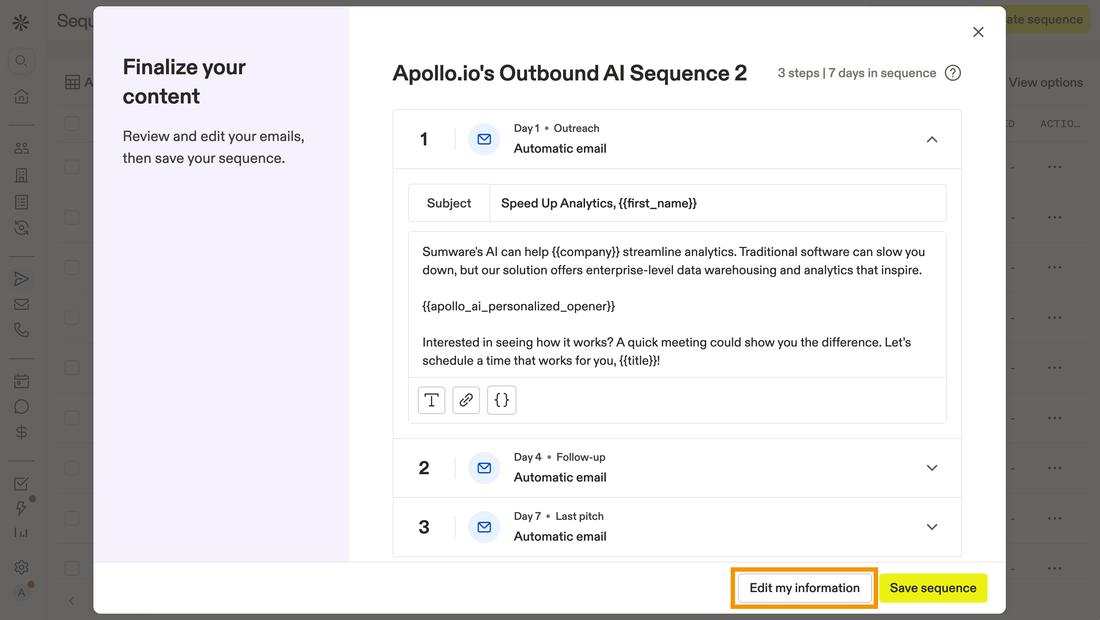
Pick Apollo alone if you need data and sequencing under one roof and your outbound motion is relatively straightforward: find contact, send sequence, track reply, route to CRM. The consolidation saves money and skips an integration layer entirely.
Layer both when your team sources leads at volume (1,000+ new contacts per month), needs reliable email verification and enrichment from Apollo, and then wants Lemlist’s sending infrastructure to handle deliverability at scale. This is the setup I’d push for any team running more than three senders. According to Salesforce’s State of Sales report, high-performing sales teams are 1.9x more likely to use three or more sales tools in their stack, which tracks with the layered approach working better at scale.
The stack that actually wins in 2026
The outbound teams I’ve seen consistently beat their benchmarks this year are not running the leanest possible stack. They are running a purpose-built one. Apollo handles list building and enrichment. Lemlist handles delivery. A lightweight CRM, usually HubSpot or Pipedrive, handles routing and handoff. That three-tool motion costs roughly $150 to $200 per sender per month all-in. The improvement in reply rates and sender reputation more than justifies the line item.
If you are under 200 contacts per month, start with Lemlist alone and bolt on Apollo when your prospecting motion needs its own data source. If you are already pulling lists from Apollo and noticing deliverability sliding after 60 days, that is the exact moment to add Lemlist as your sending layer. The fix is not warming up your existing domains harder. It is separating the data problem from the delivery problem entirely.
According to research from McKinsey on B2B sales digitization, the winning move is matching tooling to the specific constraint, not buying the most full-featured platform. That principle applies here as much as anywhere in your RevOps stack. Pick the constraint. Fix it. Then pick the next one.
Frequently asked questions
Is Lemlist better than Apollo for cold email?
Lemlist wins on deliverability controls and personalization depth. Apollo wins when you need prospecting data and sequencing in a single tool without paying for a separate data source.
Can you use Lemlist and Apollo together?
Yes. A common setup is Apollo for prospect discovery and list building, then exporting contacts into Lemlist for the actual send. This separates data quality from deliverability.
Does Apollo have good email deliverability?
Apollo's deliverability has improved but it still lacks the inbox rotation, warmup integrations, and sending infrastructure controls that Lemlist offers natively.
How much does Apollo cost vs Lemlist?
Apollo's Basic plan starts around $49 per user per month. Lemlist starts at $39 per month for email outreach. Stacking both runs roughly $80 to $120 per seat depending on tiers.
Which tool is better for a small outbound team?
For a team of one to three reps with a clean ICP and a good lead list, Lemlist alone is usually enough. Apollo makes more sense when the team also needs to build their own prospecting lists.