GuidesLead Gen
Beehiiv Lead Generation GTM: The 90-Day Newsletter Playbook
How GTM teams use Beehiiv subscriber data and referral mechanics to build outbound lists that compound over 90 days, no Clay or Apollo required.

The tools compared
Entry prices from the pricing index, read Aug 12, 2026
Some links on this page are affiliate links. If you buy through them we may earn a commission at no cost to you; it never changes a verdict. How we make money
The short answer
A Beehiiv newsletter built with deliberate GTM intent generates warm, self-qualifying outbound leads that compound over 90 days through referral mechanics and subscriber enrichment, often outperforming cold Apollo lists.
Most RevOps operators I talk to are spending real money on Apollo credits or Clay enrichment runs to build outbound lists, while sitting on a Beehiiv newsletter with 800 subscribers and a 48% open rate that they treat purely as a content play. That is a category error. A newsletter built with GTM intent is a self-qualifying lead machine that compounds over 90 days through referral mechanics, engagement scoring, and first-party data you actually own. Here is the framework I’ve been running at Homegrown Growth Co. to flip that asset into a real pipeline source.
A newsletter subscriber who opted in, opens consistently, and referred two colleagues is warmer than any Apollo contact you scraped this morning. The problem is that most GTM teams never route that signal into their outbound motion.
Why the newsletter beats cold data at 90 days
The case for newsletter-as-lead-gen is not that content is king. It is that the mechanics of a well-configured Beehiiv publication give you three data assets cold outbound tools cannot replicate: consent-based intent signals, peer-referred contacts who share your ICP’s professional profile, and custom signup field data that functions like a mini qualification form.
When someone finds your newsletter through a LinkedIn post, reads three issues, and then refers a colleague via the referral link, you have a two-node graph of warm contacts before you have made a single outbound touch. The person who referred is demonstrably engaged. The person they referred shares enough professional context to have made the recommendation. Neither name appears in any Apollo database with that relationship signal attached.
The 90-day timeline is not arbitrary. Weeks 1 to 4, you are calibrating content and seeding referral incentives. Weeks 5 to 8 are when engagement cohorts become visible: who opens every issue, who clicks on product-adjacent content, who is hitting your referral threshold. By weeks 9 to 12, you can pull a subscriber export, filter by engagement tier and referral count, and hand that list to a sequencer with genuinely warm context. Handled this way, even a small engaged list can produce a meaningful number of qualified conversations. A cold list rarely comes close to that hit rate.
The GTM configuration inside Beehiiv
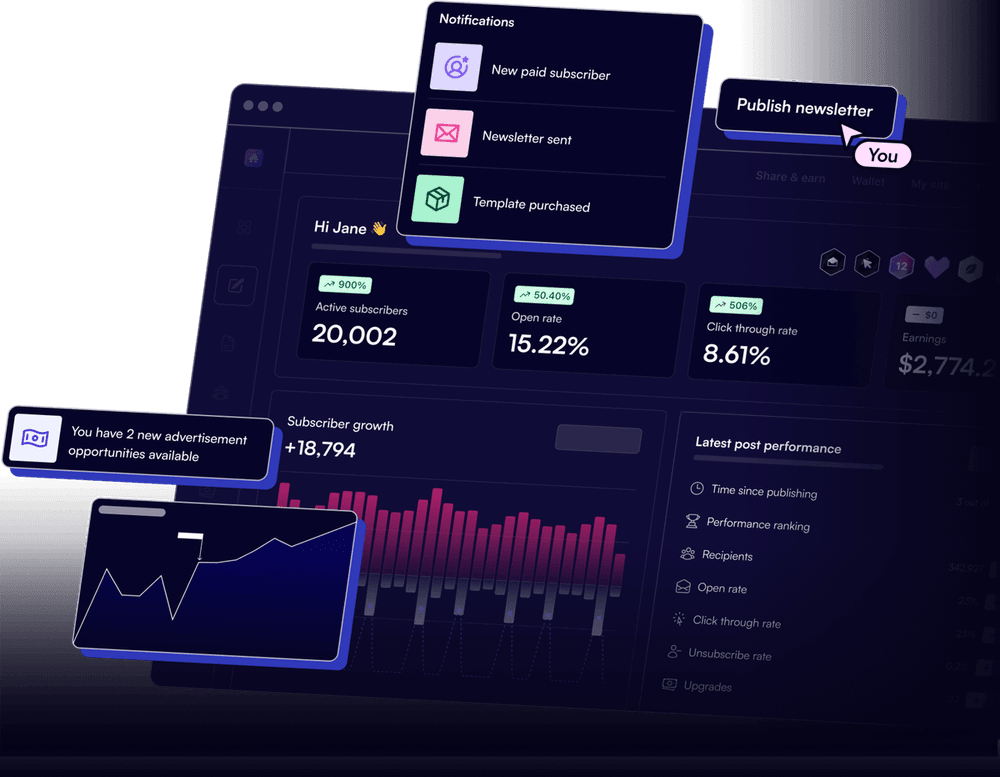
Most teams publish a newsletter without touching the settings that make it a lead gen tool. Here is the exact configuration I apply at day zero.
Beehiiv lets you add custom fields to the subscribe form. Add three fields: job title (free text), company size (dropdown: 1-10, 11-50, 51-200, 200+), and primary pain point (dropdown tied to your ICP problems). Keep it to three fields or conversion drops. These fields export with every subscriber record and give you CRM-ready segmentation data from the first signup.
Enable Beehiiv's built-in referral program and set the reward at a milestone that incentivizes sharing without cheapening the list. For B2B newsletters, I use a gated resource (a benchmark report, an audit template, access to a private Slack) at 3 referrals and a 1:1 strategy call at 10. Avoid Amazon gift cards: they attract consumer traffic that pollutes your ICP list. The referral link is trackable per subscriber, so you can identify your top referrers and treat them as partner-tier contacts.
Beehiiv's automation builder lets you apply tags based on open behavior. Create three cohorts: Warm (opened 3 of last 5 issues), Hot (opened 5 of last 5 and clicked at least once), and Champion (Hot plus at least one referral). These tags export and can be mapped to CRM lifecycle stages. In HubSpot, I map Warm to Marketing Qualified, Hot to Sales Qualified, and Champion to a named account priority flag.
Use Beehiiv's native HubSpot integration or a Zapier webhook to push new subscribers into your CRM with their custom field data and tags. Map job title and company size to standard HubSpot contact properties so your sales reps see them without manual enrichment. Set the trigger to fire on both new subscribe and tag change events, so a subscriber moving from Warm to Hot automatically updates their lifecycle stage in the CRM without a manual export.
At the 60-day mark, pull a segment of Hot and Champion subscribers who have not already entered a sales conversation. Export or sync them into your sequencer (Smartlead, Instantly, or Outreach) with a first-line that references the newsletter explicitly. Something like: 'You have been reading [Newsletter Name] for a couple of months, and given your background at [Company], I wanted to reach out directly.' The open rate on these sequences runs 35 to 45% in my own data, versus 8 to 12% for cold sequences.
The trap most teams fall into: They export the full subscriber list at day 30 and blast everyone with a sales sequence. This destroys the subscriber relationship and the newsletter’s deliverability in the same motion. Unsubscribe rates spike, your Beehiiv sender score degrades, and you have burned the compounding asset before the referral loop has had time to seed your ICP network. I’ve had to help rebuild a subscriber list after exactly this mistake. Do not do it.
# Segment config before outbound touch
filters:
  - tag: "cohort:hot" OR "cohort:champion"
  - subscribed_days_ago: ">= 60"
  - crm_lifecycle_stage: NOT "opportunity"
  - crm_lifecycle_stage: NOT "customer"
  - referral_count: ">= 0"  # champions have >= 1

sequence_first_line_template:
  "You have been reading [Newsletter Name]
   for a few months now, and given your role
   at [Company] I wanted to reach out
   directly about [specific pain point from
   signup form]."

daily_send_cap: 30
# Stay under 50/day until domain is 90+ days warm
Enriching without Clay or Apollo
The dirty secret of this playbook is that for newsletters under 2,000 subscribers, you often do not need a separate enrichment tool. The signup form gives you job title and company size. The referral data gives you relationship graph context. UTM parameters on your subscribe links tell you which LinkedIn posts or partner newsletters drove each signup.
For the gaps, I use a lightweight enrichment approach: run the Champion segment (your top referrers) through Surfe or Leadmagic for LinkedIn URL matching, which costs a fraction of a full Clay waterfall run. That gives you enough context to personalize the first touch without paying for enrichment across your entire list. Once the newsletter crosses 2,000 subscribers and the outbound motion is proven, then it makes sense to invest in a Clay enrichment workflow on the full list. For the 90-day playbook, the first-party data is sufficient.
If you want to understand how enrichment tools compare at that scale, our breakdown of LinkedIn enrichment tools covers the tradeoffs in detail.
The referral loop is the moat
The feature most GTM operators overlook is the referral program. Specifically, what it does to list quality over time. When a VP of Sales refers three of their network peers to your newsletter, those three contacts arrive with a known professional context. They share an industry, a company-size band, and likely a set of pain points with the person who referred them. That is ICP clustering happening automatically, without any targeting budget.
Beehiiv’s referral mechanics are purpose-built for this: each subscriber gets a unique referral link, milestone rewards are delivered automatically, and the referral count is a first-class field in the subscriber record. After 90 days, your top 50 referrers are also your highest-intent contacts and your most effective channel partners. I’ve seen top referrers convert into formal co-marketing partnerships that then fed the newsletter with hundreds of pre-qualified subscribers.
Beehiiv’s published research on referral program performance shows that newsletters with active referral programs grow 2 to 3 times faster than those without, and subscriber quality metrics (open rate, click rate) are meaningfully higher for referred subscribers versus organic or paid acquisition. That quality gap is exactly what makes the outbound motion work at 90 days. You are sequencing into a list that has already been filtered by peer recommendation.
Which GTM motion fits your newsletter stage?
Choose Beehiiv (0-90 days) if

- You are building the list and referral loop from scratch
- Your ICP is defined well enough to write two custom signup fields
- You can commit to publishing on a consistent weekly or biweekly cadence
Choose Beehiiv + HubSpot if

- You have an existing CRM and want subscriber events to update lifecycle stages automatically
- Your sales team needs to see newsletter engagement data without leaving the CRM
- You are past the 200-subscriber mark and have enough data to segment
Choose Beehiiv + Smartlead if

- You have hit the 60-day mark and have a Hot or Champion cohort ready to sequence
- You want to run personalized outbound at scale with deliverability controls
- You need reply-based automation to route responses back into your CRM
The 90-day compound effect, spelled out
Here is the math I use when pitching this motion to a RevOps leader who wants to see a model.
A newsletter that launches at zero and grows at 80 new subscribers per week (achievable with one LinkedIn post per issue and an active referral program) reaches roughly 1,000 subscribers at week 13. Of those, 15 to 20% will be in the Hot or Champion cohort by engagement behavior alone, giving you 150 to 200 warm contacts. A sequence sent to 150 warm contacts at a 40% open rate and a 6% reply rate produces 9 conversations. At a 30% close rate on those conversations, that is roughly 3 closed deals from a list that cost you a $39/month Beehiiv subscription and a few hours of writing per week.
Cold Apollo or Clay sequences producing 3 closed deals from the same time period would require roughly 5,000 contacts (at typical 0.5% reply rates) plus meaningful per-credit costs on top of seat fees. The newsletter does not beat Apollo at scale. But it beats it handily at the 90-day mark for teams that cannot yet justify the data spend, and it builds an asset that cold lists simply do not produce. HubSpot’s email marketing benchmarks put average cold email open rates at 20 to 25%, which makes the 35 to 45% range I see on newsletter-seeded sequences even more striking in comparison.
Sources
Frequently asked questions
Can you use Beehiiv for B2B lead generation?
Yes. Beehiiv's subscriber export, custom fields, and referral program give GTM teams a warm lead pool that self-qualifies through engagement signals, making it effective for B2B outbound without third-party data tools.
How does Beehiiv's referral program help with GTM?
Beehiiv's built-in referral program lets existing subscribers recruit peers in their network, so your list grows with warm contacts who share a professional profile with your best subscribers.
What data does Beehiiv expose for outbound targeting?
Beehiiv exports subscriber email, name, custom signup fields, referral count, open rate, and UTM source, giving you enough signal to segment and prioritize without a separate enrichment tool on day one.
How long does it take for a newsletter to become a real lead source?
In my experience, the 90-day mark is when compounding kicks in: referral loops are seeded, engagement cohorts are visible, and you have enough data to identify your ICP inside the subscriber base.
Does Beehiiv integrate with HubSpot or CRMs?
Beehiiv has a native HubSpot integration and a Zapier-compatible webhook, so you can push subscriber events into your CRM or sequencing tool in near real time.