GuidesTool vs tool
Apollo vs LeadMagic vs Clay: Data Quality and Cost in 2026
Apollo's breadth, Clay's flexibility, LeadMagic's waterfall efficiency compared on data quality and real cost-per-lead math for RevOps teams.

The tools compared
Entry prices from the pricing index, read Aug 12, 2026
Some links on this page are affiliate links. If you buy through them we may earn a commission at no cost to you; it never changes a verdict. How we make money
The short answer
Apollo wins on breadth and simplicity, Clay wins on flexibility and enrichment depth, and LeadMagic wins on cost-per-verified-lead when you run waterfall workflows.
If you’re running cold outbound in 2026 and still treating data enrichment as a single-vendor problem, you’re either overpaying or under-verifying. Usually both. The Apollo vs Clay enrichment debate has gotten more interesting now that LeadMagic has matured into a credible third option. The answer is not “pick one.” The answer is understanding which layer of the data problem each tool actually solves, then building your cost structure around that.
The core problem each tool is actually solving
Most teams frame this as a database comparison. That framing is wrong and it leads to bad buying decisions.
Apollo is a prospecting database with built-in sequences. Clay is an enrichment and workflow automation layer that happens to include some data. LeadMagic is a verification-first API with waterfall logic built in. These are three different products with partial overlap, not three versions of the same thing.
When my team ran internal benchmarks last quarter on a 15,000-contact sample pulled from the same ICP segment, Apollo returned valid emails on roughly 68% of records (after bounce checking against Smartlead’s verification). Clay waterfall through four providers (Apollo, Prospeo, Findymail, Hunter) hit 79% coverage. LeadMagic’s waterfall hit 76% coverage but at a lower per-result cost, because you only pay when a valid result comes back.
That 8 to 11 point coverage delta matters a lot if you’re doing high-volume outbound. It matters less if you’re running a targeted ABM motion where you’re manually reviewing every account anyway.
Apollo vs LeadMagic vs Clay: How each one actually works

Apollo
Apollo gives you 275M+ contacts you can filter, sequence, and export from a single UI. The value proposition is speed: you can go from ICP criteria to a 500-person sequence in under an hour without touching a second tool. The catch is that Apollo's email verification is built into the export credit model, not a separate step. You burn credits on unverified contacts. At the Basic tier ($59/seat), shared credits evaporate faster than most teams expect, especially when SDRs are doing exploratory searches. Data quality is genuinely good for US markets. International coverage, particularly EMEA mobile numbers, is spottier. Check the [Apollo to Smartlead migration guide](/blog/2026-09-30-apollo-to-smartlead-migration-keep-your-data-and-history/) if you ever want to move sequences downstream.
Highlights
- 275M+ contact database with strong US coverage
- Built-in sequences, dialers, and intent signals
- Chrome extension for LinkedIn prospecting
- Fast time-to-list for SDR teams
- Credit model penalizes exploratory searching

Clay Top pick
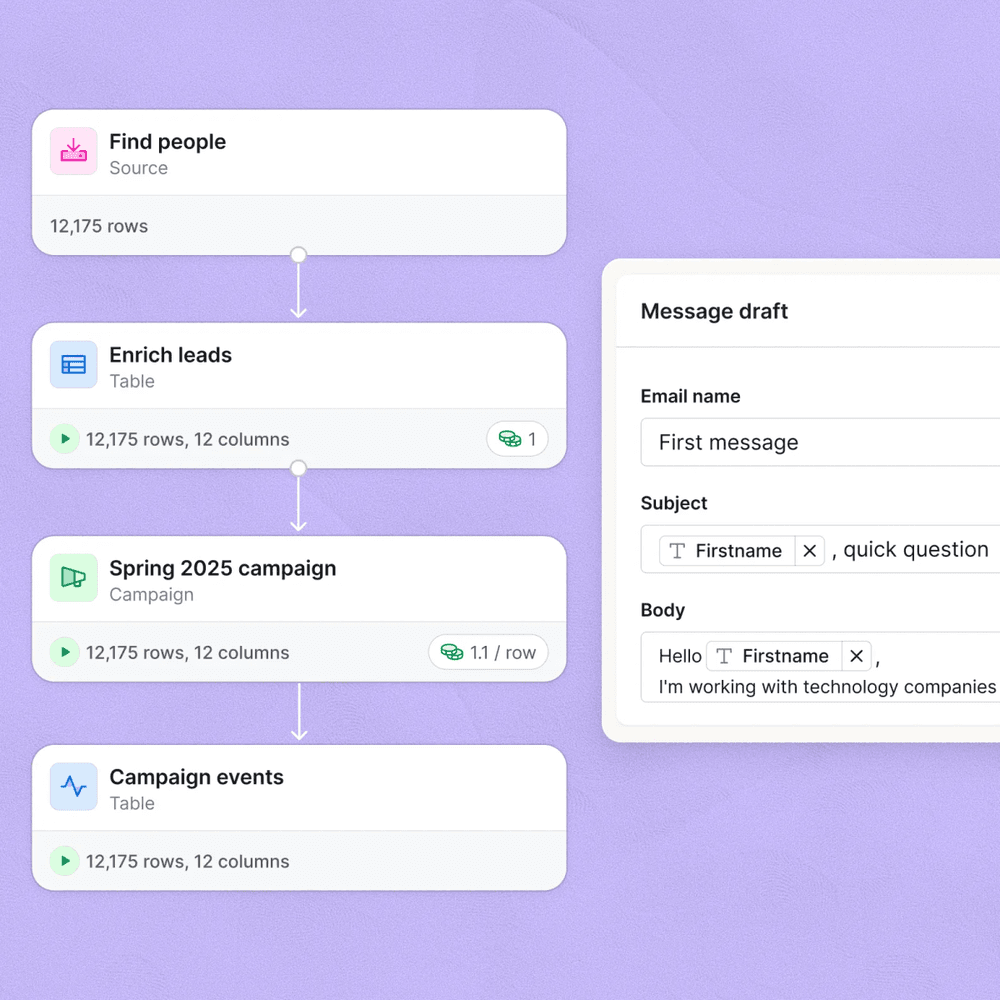
Clay is not trying to replace Apollo's database. It is trying to sit on top of every database simultaneously. You build a table, load contacts from any source (CSV, Apollo API, LinkedIn Sales Navigator, CRM), then chain enrichment columns that pull from whichever providers return results first. The waterfall logic means you only burn credits on fallback providers when primary providers fail. Architecturally, that is smarter than buying from one vendor and accepting their gaps. The downside is real: Clay has a steeper learning curve than anything else in this comparison, and the credit math gets complex when you're chaining six providers. You need someone on the team who is comfortable in Clay's table logic or you will overbuild and overpay. The [Clay tools hub](/tools/clay/) has more on setup patterns.
Highlights
- Waterfalls across Apollo, Prospeo, Findymail, Hunter, and 70+ others
- AI columns for research, personalization, and scoring
- Native CRM push to HubSpot and Salesforce
- Requires real ops investment to configure well
- Best for teams doing 5K+ enrichments per month

LeadMagic
LeadMagic's model is the most underrated in this comparison. You pay only when a valid result is returned, not per lookup attempt. Their waterfall hits multiple verification sources automatically and returns the highest-confidence result. For email and mobile enrichment specifically, this produces a lower effective cost-per-verified-lead than either Apollo credits or Clay's per-row credit model at volumes above roughly 5,000 contacts per month. The trade-off is that LeadMagic is API-first. No prospecting UI, no sequences, no LinkedIn extension. You need to bring your own contact list and your own workflow layer (Clay, [n8n](/tools/n8n/), or Zapier). Teams that pair LeadMagic as the verification step inside a Clay table get the best of both: Clay's orchestration plus LeadMagic's per-result pricing.
Highlights
- Pay-per-result, not per-lookup attempt
- Strong mobile number coverage including international
- API-first, integrates into any workflow
- No prospecting database or sequences
- Best cost structure at 5K+ verifications per month
The ROI math at three common volumes
Let me run the actual numbers at three volume tiers so you can see where each tool’s cost structure breaks.
500 contacts per month (early-stage SDR team). Apollo Basic at $59/seat covers this easily if your SDR is doing list building themselves. Clay is overkill at $149/month minimum. LeadMagic API costs are negligible but you still need a workflow to orchestrate it. Apollo wins at this tier. Don’t bother with Clay until your volume justifies the configuration overhead.
5,000 contacts per month (scaling outbound motion). Apollo Pro at $99/seat gives you a shared credit pool, but 5,000 verified exports will burn through it and may require credit top-ups at roughly $0.05 to $0.08 per export depending on tier. Clay at $349/month with waterfall configured correctly gives you better coverage and control for roughly the same spend. LeadMagic at $0.03 to $0.05 per valid result costs $150 to $250 for 5,000 verified contacts, but you need to source the raw list yourself (Apollo, LinkedIn Sales Navigator, or a static database). The hybrid stack (Apollo for discovery, LeadMagic for verification) becomes cost-competitive right at this tier.
20,000+ contacts per month (high-volume outbound). This is where Apollo’s credit model becomes genuinely expensive and the hybrid approach wins clearly. According to G2 data on Apollo pricing, enterprise tiers start at custom pricing, but the per-credit math at volume typically lands above $0.06 per export. LeadMagic at $0.03 to $0.04 per verified result cuts that cost roughly in half. Clay at scale requires an annual plan but the enrichment orchestration pays for itself through coverage gains.
One thing I’d flag that most teams underweight: B2B data decay runs at 30% annually. Any list you bought six months ago is already 15% stale. Point-in-time enrichment from a single vendor will always underperform a waterfall that re-verifies before sending.
How to choose
These tools are not fully substitutable. The best RevOps teams run two of them together. If you are choosing a primary vendor for your first enrichment motion, the decision comes down to where your bottleneck actually lives.
If your bottleneck is finding contacts in the first place, Apollo is the right starting point. Its database, intent signals, and built-in sequences let an SDR team operate end-to-end without stitching tools together. If your bottleneck is data quality and email verification, and you already have a contact source, either Clay or LeadMagic will deliver better verified coverage per dollar than Apollo’s credit model. Clay is the right call if you want a configurable enrichment layer you control. LeadMagic is the right call if you want the lowest cost-per-valid-result and are comfortable operating API-first.
For context on how intent data layers into this decision, the 6sense vs Lusha comparison is worth reading alongside this post. Enrichment quality and intent signals are increasingly interdependent, and teams that treat them as separate decisions tend to end up with redundant spend.
Choose Apollo if
- Your SDR team needs a single tool to go from ICP filters to active sequence in under an hour
- You're under 3,000 contacts per month and don't want to manage a multi-tool workflow
- US market focus where Apollo's database coverage is strongest
Choose Clay if
- You have a RevOps person who can build and maintain waterfall table logic
- You're pulling contacts from multiple sources and need one orchestration layer
- You want AI enrichment columns for personalization alongside standard email lookup
Choose LeadMagic if
- You already have a contact discovery source and need the cheapest verified email layer
- You're comfortable with API-first tools and have a workflow layer (Clay or n8n) in place
- Volume is above 5,000 contacts per month where pay-per-result pricing wins on unit economics
Where to land
The Apollo vs Clay enrichment debate in 2026 has a third answer most teams miss: LeadMagic as the verification layer changes the unit economics entirely. Apollo remains the fastest path to a working outbound motion. Clay remains the most powerful enrichment orchestration layer for operators willing to invest in configuration. LeadMagic is the most cost-efficient verification layer for teams that have already solved the discovery problem.
The teams winning on outbound data are not picking one. They’re using Apollo for discovery, routing through Clay or LeadMagic for verification, and sending through a dedicated infrastructure like Smartlead or Instantly. That three-layer stack, built correctly, consistently delivers verified contact costs under $0.05 and bounce rates under 3%.
Sources
Frequently asked questions
Is Clay better than Apollo for data enrichment in 2026?
Clay is more flexible and lets you waterfall across 75+ providers, but it requires more setup. Apollo is faster to deploy and works well as a standalone prospecting database.
What is LeadMagic and how does it compare to Apollo?
LeadMagic is a pay-as-you-go B2B data enrichment API that waterfalls email and mobile verification across multiple sources. It typically costs less per verified lead than Apollo credits when email validity is your primary concern.
How much does Clay cost compared to Apollo?
Clay starts at $149/month for 2,000 credits and scales up. Apollo's Basic plan is $59/seat/month with a shared credit pool. Clay's real cost depends heavily on how many enrichment providers you chain together.
Can you use Apollo and Clay together?
Yes, and many teams do. A common pattern is pulling Apollo lists via CSV or API, then enriching them through Clay to layer in mobile numbers, LinkedIn data, and email verification.
What is the cheapest way to get verified B2B emails at scale?
LeadMagic's pay-per-result waterfall model typically delivers the lowest cost-per-verified-email at volume, often under $0.05 per valid result when compared to Apollo or Clay credit burn rates.