GuidesTool vs tool
MoltSets vs FullEnrich: Which Covers More Leads
MoltSets vs FullEnrich compared on coverage, waterfall logic, pricing, and fit for RevOps teams enriching outbound lead lists at scale.

The tools compared
Entry prices from the pricing index, read Aug 12, 2026
Some links on this page are affiliate links. If you buy through them we may earn a commission at no cost to you; it never changes a verdict. How we make money
The short answer
MoltSets wins on raw coverage breadth through its multi-provider waterfall, while FullEnrich is the cleaner choice for teams enriching smaller lists where deliverability and LinkedIn data quality matter most.
If your outbound list is sitting at 60% email coverage and you are deciding between MoltSets and FullEnrich to close the gap, the choice is not obvious. Both tools run waterfall enrichment across multiple underlying providers, both return work emails and phone numbers, and both drop neatly into a Clay workflow or a direct API call. The difference is in where each tool’s provider mix actually shines, and which failure mode you can live with: missing coverage or missing confidence.
What each tool actually does under the hood
The marketing language around both tools sounds nearly identical: waterfall enrichment, multi-provider coverage, high deliverability. The meaningful difference is in the composition of that waterfall.
MoltSets aggregates across a wider set of providers, including some that specialize in SMB and mid-market contacts outside North America. That breadth is its main argument. If you are enriching a list that spans multiple geographies or less common industries, MoltSets will return something on a higher percentage of records. The tradeoff is that some of those matches come from lower-confidence sources, so you want a verification step downstream. This is why pairing MoltSets with a deliverability-focused tool before launch matters more than it does with FullEnrich. Skip that step and you will pay for it in domain reputation.
FullEnrich’s waterfall leans on LinkedIn-corroborated data as a primary layer. That means the records it returns are more likely to be current and deliverable, but its match rate on obscure personas or small-company targets is narrower. G2 reviewers consistently note FullEnrich performs best on Director-and-above titles at companies with active LinkedIn presences. For enterprise-focused outbound, that is exactly the right constraint. I’d argue the LinkedIn-first approach is actually underrated for senior buyer personas, where a stale email from a data co-op is worse than no email at all.
Email find rate (raw)
Geographic coverage
LinkedIn data quality
Phone number coverage
API documentation depth
Clay integration friction
Plugging each into a real outbound stack
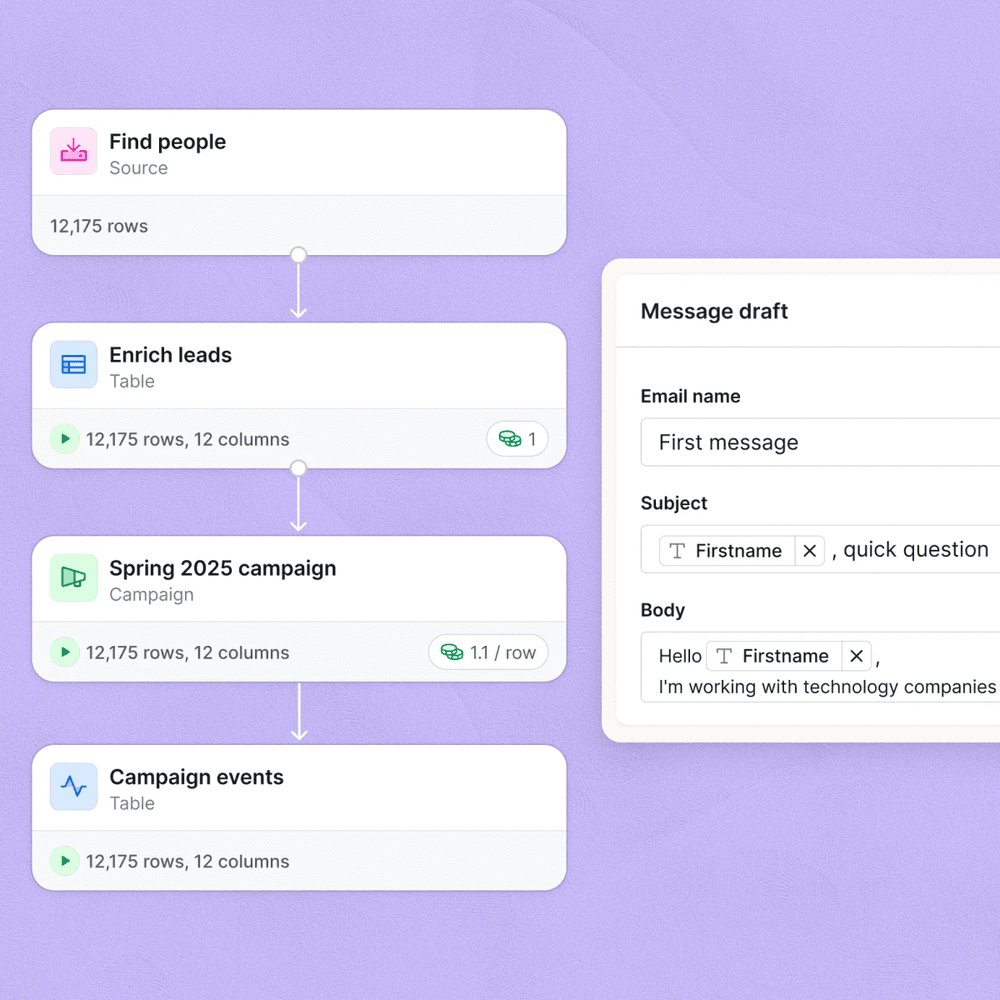
Both tools live most comfortably inside a Clay enrichment waterfall, where you sequence them as columns and only spend a credit when the previous column returns empty. That architecture is the standard RevOps pattern now. Any team not running a waterfall is leaving significant coverage on the table compared to single-source lookups, full stop.
A practical column order for a mid-market outbound list: Apollo built-in email finder first, then MoltSets for the gaps, then FullEnrich as a third pass on still-empty rows, then a final bounce-verification step with Bouncer or ZeroBounce before the list touches Smartlead or Instantly. That sequence is what Clay’s waterfall documentation is designed around, and it works because you only pay credits on actual matches at each layer.
Outside Clay, MoltSets has a cleaner API reference for direct integration into n8n or custom enrichment pipelines. FullEnrich’s API is functional but less extensively documented, which matters if your team is building a custom enrichment service rather than relying on Clay’s native columns. For teams running enrichment entirely through Clay’s waterfall UI, the documentation gap is irrelevant. But if you are wiring this into a custom stack, the difference in API verbosity is real and will cost you time.
Lusha comes up in every one of these conversations. Its differentiation is phone numbers, particularly mobile numbers for senior decision-makers. If your sequence is phone-first rather than email-first, Lusha is the more natural primary tool, with MoltSets or FullEnrich handling the email layer. For pure email enrichment, Lusha rarely wins the coverage argument.
How to choose
The first question I’d ask is: what does your ICP actually look like? If you are enriching lists of VP-and-above buyers at Series B-and-later SaaS companies with active LinkedIn profiles, FullEnrich’s confidence advantage probably outweighs any coverage gap. You will get fewer matched records, but the ones you get will bounce less. That matters a lot for domain reputation when you are sending at volume through shared infrastructure.
If your ICP is broader, geographic coverage matters, or you are working lists that mix SMB with enterprise, MoltSets’ wider provider net will return more usable records overall. The usual failure here is teams optimizing for find rate without thinking about what happens downstream. A 10% higher find rate means nothing if a higher share of those emails hard-bounce and start degrading your sending domain. My read is that the verification step is non-negotiable once you are sending more than a few hundred emails per day. Build it in before you celebrate the coverage number.
Which tool fits your enrichment workflow?
Choose MoltSets if

- Your ICP spans multiple geos, industries, or company sizes where no single provider dominates.
- You are running a Clay waterfall and want maximum first-pass coverage before spending credits on secondary tools.
- You have a downstream bounce-verification step and can absorb some lower-confidence matches.
Choose FullEnrich if

- Your ICP is senior decision-makers at companies with strong LinkedIn presence, primarily North America or EU.
- Deliverability is paramount and you would rather have fewer but higher-confidence matches.
- You are enriching a smaller, curated list where precision matters more than raw volume.
Choose Lusha if

- Phone numbers, especially mobile numbers for senior buyers, are your primary enrichment goal.
- You run a phone-first or multi-channel sequence where email is secondary.
- Your team values a managed platform with compliance handling rather than a raw API.
The bottom line on contact data coverage
Neither tool dominates across every use case. That is the honest answer. MoltSets covers more leads in raw terms, particularly on diverse or international lists. FullEnrich returns more trustworthy records on senior enterprise personas. The teams getting the most out of both are the ones who stopped treating them as competing tools and started running them as sequential waterfall layers, which is what the per-credit pricing model is designed for anyway.
If you are only going to pick one to start with, MoltSets gets you further on a first pass against an unknown list. If you have already run a first-pass enrichment and want to upgrade confidence on the matched records, FullEnrich earns its place as the quality layer.
Sources
Frequently asked questions
Is MoltSets better than FullEnrich for cold email lists?
MoltSets tends to surface more total emails through its waterfall approach, but FullEnrich returns higher-confidence LinkedIn-verified data. For large cold email volumes, MoltSets covers more leads; for precision outreach, FullEnrich is the safer pick.
Does FullEnrich have a waterfall enrichment model?
Yes. FullEnrich runs a cascade across multiple underlying providers before returning a result, similar to MoltSets, but its provider mix skews toward LinkedIn-sourced data and business email verification.
What is MoltSets used for?
MoltSets is a contact data API used to find and verify work emails and phone numbers at scale, typically integrated into Clay workflows or outbound automation stacks.
How does MoltSets pricing compare to FullEnrich?
Both tools charge on a per-credit or per-enrichment basis. MoltSets is generally more cost-effective at high volume, while FullEnrich's pricing reflects its emphasis on verified, high-quality matches.
Can I use MoltSets and FullEnrich together?
Yes, and many RevOps teams do. A common pattern is running MoltSets first for broad coverage, then passing unmatched records through FullEnrich as a secondary waterfall layer.