GuidesTool vs tool
ActiveCampaign vs HubSpot vs Brevo: Which Owns Your Workflows
Mid-market RevOps comparison of ActiveCampaign, HubSpot, and Brevo. Which marketing automation platform fits without forcing a painful migration later.

The tools compared
Entry prices from the pricing index, read Aug 12, 2026
Some links on this page are affiliate links. If you buy through them we may earn a commission at no cost to you; it never changes a verdict. How we make money
The short answer
HubSpot wins for teams that want CRM and automation unified, ActiveCampaign wins on automation depth at a sane price point, and Brevo wins only if email volume cost is your primary constraint.
Most marketing automation evaluations start with the wrong question. Teams ask “which has more features?” when they should be asking “which one will I hate rebuilding in 18 months?” A common cycle is to pick the cheapest option, max out its automation logic, and spend a quarter migrating to HubSpot with a bruised ops team and broken attribution. This comparison exists to save you that quarter.
What each platform actually does to your workflows
I want to be specific here, because vendor marketing pages all say “powerful automation.” Here is what these platforms actually do when you push them.
ActiveCampaign gives you the most expressive automation canvas of the three. You can stack goal conditions, run split tests inside automations, and set “waits” that respond to contact behavior rather than fixed timers. The CRM (Deals) is functional but thin. Where I’ve seen it shine: lifecycle nurture sequences that branch simultaneously on CRM stage, lead score, and last email interaction. Where it breaks: reporting. The reporting UI is fragmented, and cross-automation attribution requires either their Attribution add-on or a BI layer like Looker piped in from your warehouse.
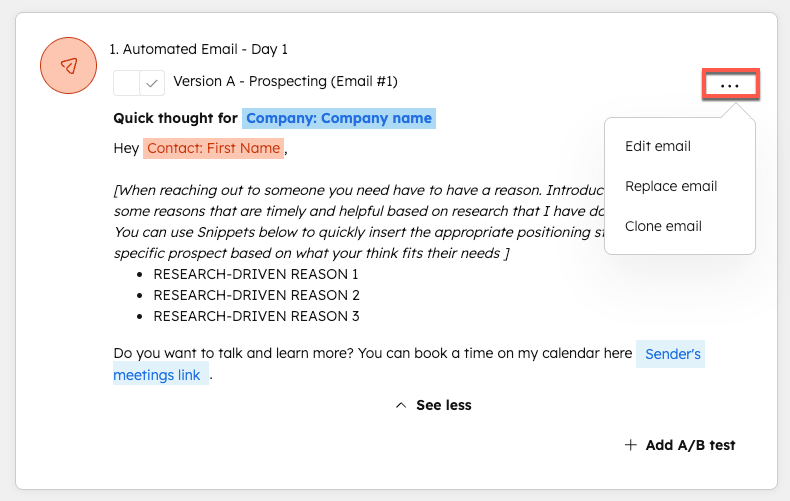
HubSpot is the only platform here where a RevOps operator can sit in one tab and see automation enrollment, deal stage movement, sequence performance, and revenue attribution without exporting a single CSV. The workflow builder is less expressive than ActiveCampaign on pure conditional logic, but the data context it operates on is richer. A HubSpot workflow can branch on deal properties, meeting booked status, and contact lifecycle stage because all of that data lives natively. When teams ask me which platform has the least duct tape, the answer is always HubSpot, assuming they can stomach the pricing.
Brevo positions itself as HubSpot’s affordable alternative, but that framing undersells how different the product philosophy actually is. Brevo is volume-first. The automation builder handles straightforward drip sequences and transactional triggers well. It falls apart on anything requiring multi-object logic (contact plus company plus deal) because Brevo’s data model is contact-flat. Teams I’ve worked with that started on Brevo for “just newsletter and onboarding” invariably outgrow it the moment sales gets involved and wants CRM-linked triggers.
Which platform fits your team?
Choose HubSpot if

- You want CRM, automation, sequences, and reporting in one system without middleware
- You have a dedicated RevOps hire or plan to hire one. HubSpot rewards operators who can manage it properly
- You are okay paying a premium now to avoid a painful migration in 18 months
Choose ActiveCampaign if

- You need advanced automation logic (goal steps, split tests, behavioral waits) without paying HubSpot prices
- Your CRM is a separate system (Pipedrive, Salesforce) and you want the best automation layer to sync into it
- Your contact list is under 100k and you want cost-efficient nurture at scale
Choose Brevo if

- Email volume is your primary cost driver and your list is large but infrequently mailed
- You need transactional email (order confirms, password resets) plus basic marketing drips in one tool
- Your automation requirements are simple enough to describe in under ten steps
How to choose without regretting it
The decision comes down to one question before everything else: does your sales team live in this platform or not? If sales touches the tool, HubSpot is the only serious answer in this set. The moment a rep needs to enroll a contact in a sequence, log a call, or see contact history, you need CRM-native automation. Full stop.
Bolting ActiveCampaign onto a separate CRM works, but it creates sync lag, attribution gaps, and a support ticket every time field mapping drifts. I’ve debugged those gaps before. Neither team would make the same call again. The sync problem is not a setup issue; it is a structural one. Two systems with overlapping contact records will diverge. Budget for the maintenance or avoid the architecture.
If sales is running in a dedicated CRM like Salesforce or Pipedrive and marketing just needs a best-in-class nurture and lifecycle engine to sync data back, ActiveCampaign is the smart play. You get more automation flexibility than HubSpot’s workflow builder for roughly 20% of the cost, and you keep your CRM of record intact. The integration story between ActiveCampaign and Salesforce via native connector or n8n is solid enough that the sync gap is manageable with a competent RevOps setup. For context on the CRM-side decision, our Pipedrive vs Attio breakdown covers the standalone CRM angle well.
Brevo belongs in a specific scenario: PLG or e-commerce adjacent companies with a massive contact list, low send frequency, and simple drip logic. In pure email-cost terms, Brevo’s pricing model wins at 500k or more contacts where HubSpot’s per-contact tiers become genuinely painful. For most mid-market B2B SaaS teams, that scenario does not apply. You hit the automation ceiling before you reach the contact pricing inflection point where Brevo becomes cheaper. A common failure is talking yourself into Brevo over a small monthly price difference and then spending more in ops hours rebuilding everything on ActiveCampaign later.
The automation spine you will actually keep
This is not a close race for mid-market B2B teams with any sales complexity. HubSpot is the platform you build on when you want to stop rebuilding. According to HubSpot’s own product documentation, Marketing Hub Professional starts at $800/mo for 2,000 contacts, which sounds steep until you price out the BI tool, CRM sync, and attribution layer you would need to replicate that reporting elsewhere. ActiveCampaign is the platform you build on when you want HubSpot-grade automation logic without HubSpot’s price tag and you already have a CRM. Brevo is a tactical email tool that gets stretched into a role it was not designed for.
The question of which platform owns your workflows without forcing migration pain has a cleaner answer than most vendor comparisons admit. HubSpot owns your workflows because it is the hardest to leave. That is a feature, not a problem. If you are not ready for that commitment, ActiveCampaign gives you the most migration-friendly middle ground. And per G2’s marketing automation category data, both HubSpot and ActiveCampaign consistently outrank Brevo on satisfaction scores for teams above 50 employees, which tracks with what I see in practice.
For teams already deep in the HubSpot ecosystem and considering a move, the switching calculus only gets more expensive over time. The migration cost breakdown we covered here applies equally in reverse.
Sources
Frequently asked questions
Is ActiveCampaign better than HubSpot for marketing automation?
ActiveCampaign has deeper conditional logic and automation branching at a lower price point. HubSpot wins when you need native CRM, reporting, and sales sequences in one system without integration overhead.
What is the main difference between HubSpot and Brevo?
HubSpot bundles CRM, automation, and reporting with per-contact pricing. Brevo charges by email volume sent, making it cheaper for large lists with low send frequency but weaker on CRM depth and automation complexity.
Is Brevo good for mid-market B2B teams?
Brevo fits transactional email, newsletter workflows, and budget-constrained teams. Most mid-market B2B teams outgrow its automation logic and CRM capabilities before they hit the contact limits where Brevo's pricing advantage kicks in.
Can ActiveCampaign replace a CRM?
ActiveCampaign has a built-in CRM called Deals, but it is pipeline-lite. It works for SMB sales motions, but mid-market teams running complex deal cycles typically pair it with a dedicated CRM like Pipedrive or HubSpot.
Which marketing automation platform is easiest to migrate away from?
Brevo is the easiest to exit because it has minimal proprietary logic lock-in. ActiveCampaign automation exports are human-readable but need rebuilding. HubSpot is the hardest to leave once workflows, sequences, and reporting are deeply embedded.