GuidesRevOps
Lusha Competitors That Stop Credit Drain Dead
Lusha credits burning fast, leads not closing? Here are the waterfall enrichment alternatives RevOps teams are switching to in 2026.

The tools compared
Entry prices from the pricing index, read Aug 12, 2026
Some links on this page are affiliate links. If you buy through them we may earn a commission at no cost to you; it never changes a verdict. How we make money
The short answer
If your Lusha credits are gone before the pipeline fills, switch to a waterfall enrichment approach using Prospeo, FullEnrich, BetterContact, or Clay to only pay for verified data that converts.
Here is a failure mode I see consistently across mid-market RevOps builds. A team buys Lusha on the promise of fast contact data, runs one enrichment pass against a 5,000-row import, watches the credit balance crater, and then realizes the connected sequences are firing on records where maybe 40 percent of the emails will actually deliver. The credits are gone. The bounce rate is climbing. The pipeline movement that justified the spend is nowhere in sight. The fix is not to buy more credits. It is to rethink the data layer entirely.
The actual problem with how Lusha bills
Lusha’s credit model is straightforward on the surface: each reveal costs one credit. The trap is that “reveal” means the attempt, not the result. Query a record with an outdated title, a company that pivoted, or a personal email Lusha does not have indexed, and the credit is gone. For a curated list of warm inbound leads, that model is fine. For a cold prospecting list pulled from a ZoomInfo export or a scrape, you are essentially paying to discover what Lusha does not know.
Per Lusha’s published pricing page, the free tier caps at 480 credits per year, and anything meaningful in bulk requires a paid plan. Their Teams plan runs roughly $49 per user per month, and credits do not roll over on annual billing in the way most teams assume. A 3-seat team running 2,000 enrichment attempts per month will hit that wall fast.
The downstream damage compounds. G2 reviewers on Lusha consistently flag mobile number accuracy and email freshness as the two biggest pain points. Stale emails hitting sequences is not just a wasted credit problem. It is a sender reputation problem. If you are running outbound through Smartlead or Instantly and your bounce rate spikes above 3 percent, you are in deliverability recovery mode, which costs far more than the credits did. I covered the deliverability stakes in detail in the Instantly vs Smartlead comparison.
My read is that most teams underestimate the compounding effect. You do not just lose the credit. You degrade the sending infrastructure that everything else depends on.
The waterfall enrichment alternatives worth running
The logic of waterfall enrichment is simple. Try the cheapest provider first. Fall through to the next on a miss. Stop when you get a verified hit. You pay for success, not attempts. The four tools below are the ones I would actually evaluate in a RevOps stack audit.
Don’t bother trying to replicate waterfall logic manually with two separate Lusha-style tools. The coordination overhead eats any savings. Use a purpose-built waterfall layer from day one.
Lusha Competitors Worth Evaluating

Prospeo
Prospeo is the most underrated direct swap for Lusha in the sub-$100/month range. It offers email finder, bulk domain search, and a LinkedIn Sales Navigator export tool that pulls verified emails directly from SalesNav results. The find rate on business emails is strong, and unlike Lusha, Prospeo's credit model is per-verified-email rather than per-attempt. If the lookup fails, you keep the credit. That alone changes the math dramatically on cold list enrichment.
Highlights
- Credits only consumed on successful email finds
- LinkedIn SalesNav export pulls verified emails at scale
- Domain search for finding all contacts at a target account
- Email verification built in, not an add-on

FullEnrich Top pick
FullEnrich is purpose-built for the waterfall model. You send one enrichment request, and FullEnrich queries up to 15 data providers in sequence, stopping when it gets a verified match. You only pay for the result. This is the architecture Lusha customers running high-volume enrichment should be looking at. The per-record cost is typically $0.10 to $0.30 depending on plan, which undercuts what most teams are actually paying per Lusha reveal at scale. It connects cleanly to HubSpot and Salesforce via API, and [FullEnrich](/tools/fullenrich/) is one of the few tools that publishes its provider waterfall order transparently.
Highlights
- Queries 15+ providers per request automatically
- Pay-per-verified-result billing model
- HubSpot and Salesforce API integration
- Transparent provider waterfall documentation

BetterContact
[BetterContact](/go/bettercontact/) runs a similar waterfall model to FullEnrich but layers in real-time SMTP verification before returning a result. That means the email address you get back has been checked against the mail server, not just matched against a database. For teams where deliverability is the primary concern, that extra verification step matters. BetterContact also integrates natively with Clay, which makes it a natural enrichment step in a Clay workflow if you want a layered approach without hand-coding provider fallbacks.
Highlights
- Real-time SMTP verification on every returned email
- Native Clay integration for workflow enrichment
- Waterfall across multiple providers before charging
- Useful for teams with active deliverability constraints

Clay
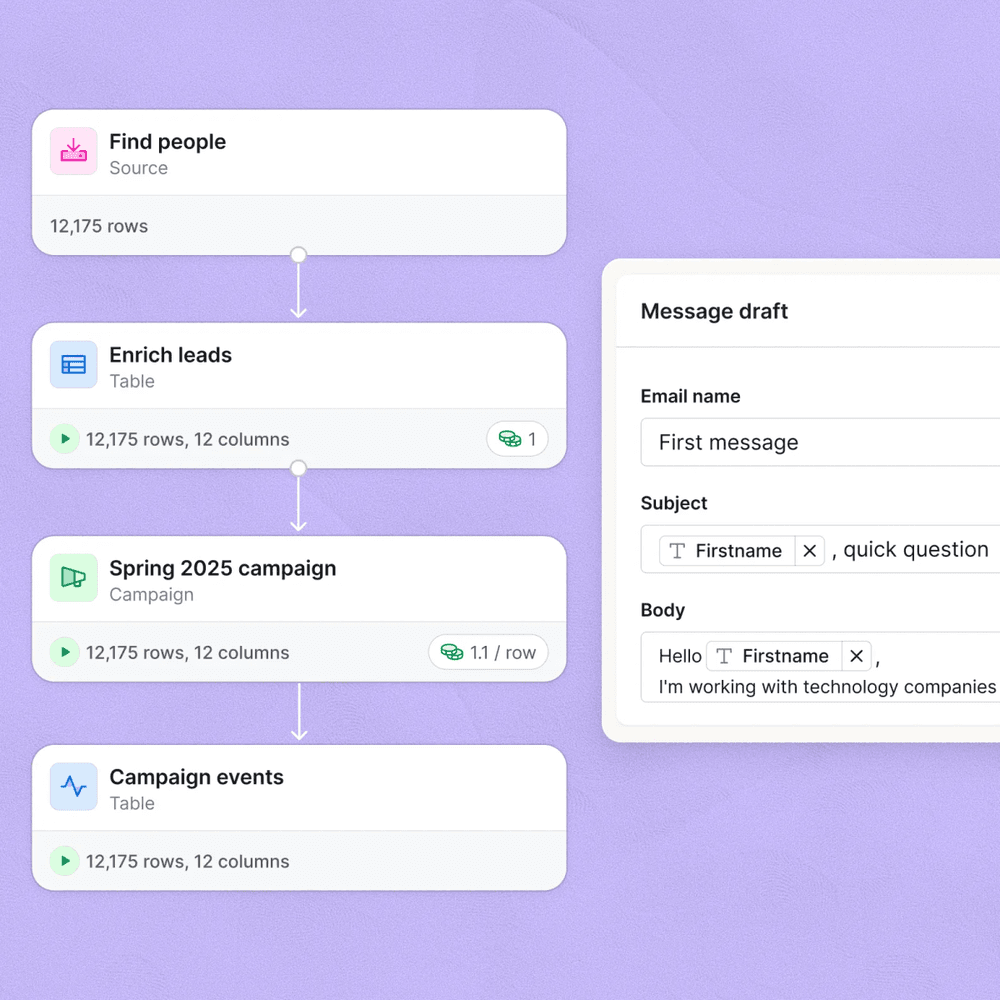
Clay is not a direct Lusha swap. It is an enrichment orchestration layer that sits above providers, including Lusha, Prospeo, FullEnrich, BetterContact, Hunter, Clearbit, and roughly 50 others. You build a waterfall inside Clay using a column-based table interface, and credits (called Clay credits) are spent on each provider call. The payoff is that you can define fallback logic precisely: try provider A for email, fall to provider B on a miss, then verify with a third. The screenshot below shows what that enrichment table looks like in practice.
Highlights
- Routes across 50+ enrichment providers in one workflow
- Custom waterfall logic with conditional column fallbacks
- AI-powered research columns for custom fields
- Strong HubSpot and Salesforce two-way sync
How to choose the right one for your stack
The choice comes down to three things: your volume, your tolerance for setup time, and whether you need phone data or just email. I’d argue most teams overestimate how much Clay they need. If you are under 2,000 enrichments per month, Prospeo or FullEnrich will get you 90 percent of the outcome at a fraction of the complexity.
Which Lusha Alternative Fits Your Stack?
Choose Prospeo if
- You enrich fewer than 5,000 contacts per month
- Your team lives in LinkedIn Sales Navigator for prospecting
- You want a direct Lusha swap with minimal setup
Choose FullEnrich if
- You run bulk enrichment on large cold lists
- You want to pay only for verified results, never failed lookups
- You need clean API integration into HubSpot or Salesforce
Choose BetterContact if
- Deliverability is your primary risk concern right now
- You already use or plan to use Clay in your enrichment workflow
- You want SMTP-verified emails before they hit a sequence
Choose Clay if
- You enrich at high volume and want full waterfall control
- You need enrichment beyond email: firmographics, intent signals, custom AI research
- Your RevOps team can invest 2 to 4 hours to build and tune the workflow
The build that actually stops credit drain
If I were scoping a fix for a team bleeding Lusha credits, here is the sequencing I would recommend. It is not complicated, but the order matters.
Pull your last 30 days of Lusha enrichment. Calculate verified emails returned divided by total credits spent. If that number is below 60 percent, you are paying for failure at scale. Export the failed records, because those are exactly what you will re-enrich with the waterfall tool.
Under 2,000 enrichments per month: start with Prospeo, it is the lowest-friction swap. Over 2,000 per month with deliverability risk: go directly to FullEnrich or BetterContact. Over 10,000 per month with custom enrichment needs: Clay is the right infrastructure investment.
Do not start fresh. Take the contacts Lusha returned no data on and run them through your new waterfall tool. This is where the ROI case is clearest and fastest: you are covering gaps you already paid to discover.
Push verified emails into HubSpot or Salesforce using the native integration or a Zapier step. Map to a custom field like 'Enrichment Source' so you can track which provider is winning and adjust the waterfall order over time.
In your sending tool (Smartlead, Instantly, Outreach, whatever you run), add an enrollment filter that requires the 'Verified Email' field to be populated before a contact enters a sequence. This is the step most teams skip, and it is the one that actually protects deliverability.
The common trap: Teams switch providers but keep enrolling contacts into sequences immediately after enrichment, before any verification step runs. The new provider may have a higher find rate, but if you are not gating on verification status, you are still sending to unvalidated addresses. Bounce rate follows regardless of which provider you paid.
HubSpot Enrollment Filter Example

Contact Enrollment Trigger:
  - Enrichment Source is known
  - Verified Email = true
  - Sequence Enrolled = false

Then: Enroll in sequence
Else: Add to "Needs Manual Review" list
For a deeper look at how Lusha stacks up specifically on intent data before you make the switch, the Lead411 vs Lusha comparison is worth reading alongside this. And if your credit drain problem is compounded by poor list quality at the source, Apollo vs LeadMagic vs Clay covers the upstream data sourcing question well.
Stop optimizing credits, start optimizing verified contacts
The unit that matters is not cost-per-credit. It is cost-per-verified-contact that enters a sequence and does not bounce. Lusha’s credit model made sense when teams were doing targeted lookups on warm accounts. It breaks down at scale on cold lists, which is where most outbound motion lives in 2026.
The waterfall alternatives above are not just cheaper on paper. They are cheaper where it counts: in the ratio of deliverable emails to dollars spent. Pick the layer that matches your volume and your technical appetite, gate your sequence enrollment on verification status, and the credit problem becomes a data quality advantage.
Sources
Frequently asked questions
What are the best Lusha competitors for B2B email enrichment?
Prospeo, FullEnrich, BetterContact, and Clay are the strongest Lusha competitors for B2B email enrichment. Each offers waterfall enrichment or multi-provider fallback so you pay per verified result rather than per lookup attempt.
Why do Lusha credits drain so fast?
Lusha charges a credit per reveal attempt, even when the contact has no data or the email bounces. Teams running bulk enrichment against cold lists burn through credits on records that never enrich.
What is waterfall enrichment and how does it save money?
Waterfall enrichment queries a second or third data provider only when the first fails. You pay for the cheapest source that succeeds, which dramatically cuts cost-per-verified-contact versus paying a single premium provider for every attempt.
Is Clay a direct Lusha replacement?
Clay is not a single-provider replacement. It orchestrates enrichment across many providers including Lusha itself, making it more of a routing layer than a head-to-head swap. It costs more on setup but usually less per verified contact at scale.
Does FullEnrich work with HubSpot and Salesforce?
Yes, FullEnrich offers native CSV upload and API access that connects to HubSpot and Salesforce workflows. Teams typically push enriched records back via a Zapier step or direct API call.