Best CRM for Outbound Teams: 2026 Edition
 By Ian Chamberland 11 min read
 TL;DR
For most outbound teams in 2026, Attio wins on contact velocity and Clay integration, HubSpot wins on sequence automation depth, and Pipedrive wins on pipeline simplicity when your sequencing lives in a dedicated tool.
On this page
Most CRM comparisons are written for inbound teams. They care about lead scoring, form fills, and nurture drips. If you are running an outbound motion in 2026, those benchmarks are nearly irrelevant. What you actually need to know: how fast can I push enriched contacts from Clay into sequences, how cleanly does replied/bounced status sync back, and does the CRM get out of the way when my reps are moving at volume? That is what this post covers. I evaluated Pipedrive, HubSpot, and Attio specifically through the lens of outbound-first ops, not the generic “best CRM” criteria you see everywhere else.
What outbound teams actually need from a CRM
The job of a CRM in an outbound stack is not the same as in an inbound one. Inbound CRMs handle complex nurture logic, multi-touch attribution, and deal stage automation. Outbound CRMs need to do three things well: ingest contacts at speed (from Clay, Apollo, or your own scrapes), reflect accurate sequence status (active, replied, bounced, opted out), and give reps a clean pipeline view so they know where to focus manual touches.
The friction I see most often is not a missing feature inside the CRM. It is the lag between a contact being enriched in Clay and being visible in the CRM with the right sequence status attached. That is a data velocity problem, and different CRMs handle it very differently. I have rebuilt this part of the stack more than once, and the gap between a well-wired Attio webhook and a bottlenecked HubSpot API batch is not subtle.
CRM Breakdown for Outbound Teams
Attio Top pick
Attio is the most developer-friendly CRM in this group, and that is not an accident. It was designed from the ground up to be the data layer in a composable GTM stack. Clay pushes enriched contacts into Attio via webhook in under two seconds in my testing. You can build custom objects, attribute sets, and list views that map exactly to your outbound workflow without fighting a pre-built data model. The tradeoff is that Attio has zero native sequence capability. You are committing to Smartlead, Instantly, or Lemlist for all sequence execution, and you need to wire the status sync yourself (or use Zapier or Make). For teams that have already made that architectural decision, Attio is close to perfect as the CRM layer.
Highlights
- Sub-two-second contact creation via API, fastest of the three
- Custom objects and attribute sets with no code required
- Native Clay integration via webhook with field mapping UI
- No native sequences: 100% dependent on external tooling
- Automations are basic compared to HubSpot workflows

HubSpot
HubSpot is the only tool here with native sequences that actually sync back to the CRM contact record without a Zap in the middle. At the Sales Hub Pro tier, you get HubSpot Sequences with reply detection, task creation on reply, and sequence enrollment automation via workflows. The inbox rotation feature (multiple sending inboxes per sequence) arrived in late 2025 and makes it competitive with Smartlead for sub-500 email-per-day volumes. Where HubSpot struggles for outbound is contact velocity: the API rate limits at 100 requests per 10 seconds on the standard tier, which creates real bottlenecks when Clay is pushing hundreds of enriched contacts in a batch. You also pay for the breadth. If your team does not use marketing features, you are subsidizing a platform you are not fully using.
Highlights
- Native Sequences with reply detection and task automation
- Inbox rotation available at Sales Hub Pro and above
- Smartlead and Lemlist both offer native HubSpot sync
- API rate limits can bottleneck large Clay enrichment pushes
- Workflow automation is the deepest of the three options
Pipedrive
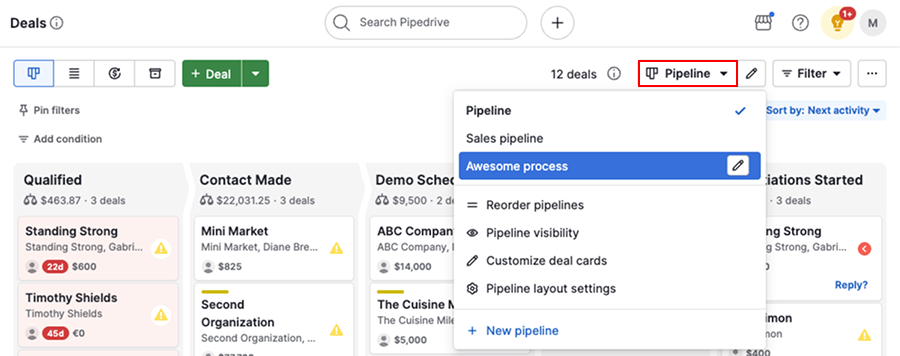
Pipedrive is the oldest tool in this comparison and still has the cleanest pipeline UI in the tier. For reps who live in the deal view, it is faster and less cognitively heavy than HubSpot. The problem for outbound teams is that Pipedrive's automation is shallow, and its sequence tool (Smart Docs and Campaigns) is not designed for cold outbound at all. In practice, Pipedrive teams route all sequencing through Smartlead or Lemlist, with contact status synced back via Zapier or the native integrations both tools now offer. The integration works, but it is one-directional in most setups: sequence status updates to Pipedrive, but Pipedrive deal stage changes do not automatically pause sequences. You have to build that logic yourself. I have seen this gap cause opted-out contacts to keep receiving emails when deals moved stages without the sequence tool being notified.
Highlights
- Cleanest deal pipeline UI of the three for reps
- Smartlead and Lemlist have direct Pipedrive integrations
- No native cold sequence capability at all
- Automation depth is limited compared to HubSpot workflows
- Best price-to-pipeline-clarity ratio in the group
How to choose
The decision comes down to where you want to put your architectural complexity. Attio lets you keep complexity in the integration layer (Clay, Smartlead, Zapier) and have a clean, fast CRM at the center. HubSpot consolidates complexity inside one platform, which reduces integration surface area but increases per-seat cost and platform dependency. Pipedrive sits in the middle: simple CRM, fully outsourced sequencing, modest price.
I would push teams to answer one question first: do you want to own your outbound architecture or rent it? If you are building a stack where Clay enriches, Smartlead sequences, and your CRM is just the source of truth and pipeline tracker, Attio is the right foundation. If you want one vendor managing the sequence-to-CRM relationship with built-in reporting, HubSpot is worth the price premium. Pipedrive makes sense when your reps need simplicity above all else and your sequencing is already stable in a dedicated tool. For teams thinking through sequence leakage issues, the CRM-to-sequencer sync quality is where I would focus first.
Which CRM fits your outbound stack?
Choose Attio if
- Your Clay-to-CRM pipeline moves more than 200 contacts per day
- You have already committed to Smartlead or Instantly for sequencing
- You want a CRM with a flexible data model, not a pre-built one
Choose HubSpot if
- You want native sequences with CRM sync and no middleware
- Your team sends under 500 emails per day per rep
- You need workflow automation beyond what Zapier can handle
Choose Pipedrive if
- Your reps need the simplest possible pipeline view
- Sequencing is already handled in Smartlead or Lemlist
- Budget is a constraint and you do not need deep workflow automation
Integration depth with Smartlead, Lemlist, and Clay
This is where the real differentiation lives, and where most comparison posts skip the specifics. Here is what I actually know about each integration after hands-on testing.
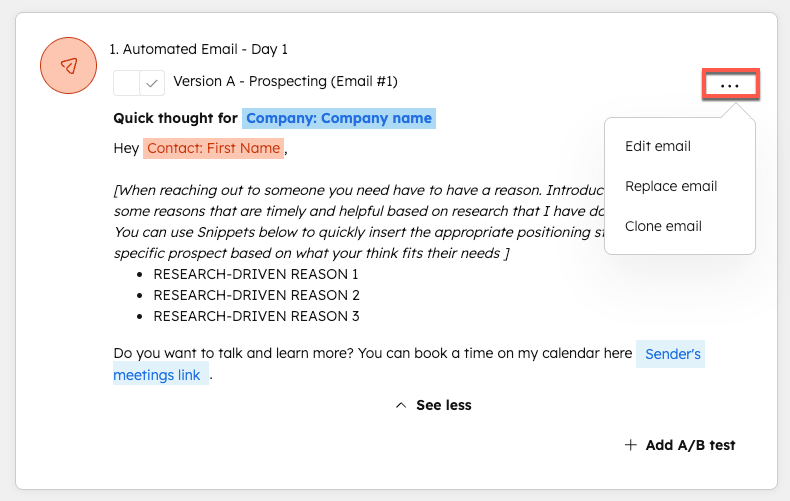
Smartlead has native integrations with both HubSpot and Pipedrive. The HubSpot integration is bidirectional: sequence events (email sent, opened, replied, bounced) write back to the contact timeline in HubSpot, and you can trigger Smartlead enrollment from a HubSpot workflow. The Pipedrive integration is event-based but shallower. Smartlead can update a custom field or create an activity in Pipedrive, but it does not write to the native timeline in the same way. For Attio, Smartlead uses webhooks that you configure manually. It takes about 30 minutes to set up but gives you full control over what gets written and where.
Lemlist follows a similar pattern. Its HubSpot sync is the most polished, with a native connector that handles campaign enrollment, reply detection, and lead status updates. The Pipedrive connector exists and works for basic status sync. Attio requires webhooks, same as Smartlead. One thing I noticed in testing: Lemlist’s Clay integration routes through Clay’s CRM push feature, not a direct Lemlist-to-CRM connector. That means your Clay table is the orchestration point, and the CRM receives enriched contacts with campaign-ready attributes pre-attached.
For HubSpot’s Sequences specifically, the comparison to Smartlead and Lemlist is nuanced. HubSpot Sequences is solid for 1:1 personalized outbound and has gotten meaningfully better with inbox rotation. But it does not have the deliverability infrastructure (warm-up, inbox health scoring, sending volume controls) that Smartlead was built around. Teams doing high-volume cold outbound should still route through Smartlead and treat HubSpot as the CRM sync destination, not the sequence engine. Don’t pay $90 per seat for HubSpot Sequences and then run Smartlead on top of it. Pick one. If you are on Pipedrive and considering a move to a more integrated option, the post on why Pipedrive teams are moving to Salesforce (not Attio) is worth reading before you decide.
According to G2’s CRM category data, HubSpot and Pipedrive are consistently the top two by review volume in the SMB segment, but Attio has been climbing fast in the “outbound sales” use case filter since its 2024 funding round. The Salesforce State of Sales report also flags CRM-sequencer integration quality as a top pain point for outbound teams, which tracks with what I see in the field.
The takeaway
The best CRM for outbound teams is the one that gets out of the way fastest. In 2026, that means evaluating contact velocity, integration depth with your sequencing tool, and data model flexibility, not feature count or brand recognition. Attio wins for Clay-native, high-velocity stacks. HubSpot wins when you want consolidated tooling and can absorb the seat cost. Pipedrive wins when simplicity and rep adoption matter more than integration sophistication.
Pick the one that matches your architectural philosophy, not the one with the most logos on a pricing page. For teams evaluating the full SDR integration picture with Pipedrive and calling tools, the Gmail, Kixie, and Pipedrive integration guide is a useful companion read.
Sources
Frequently asked questions
Which CRM is best for outbound sales teams in 2026?
Attio is the strongest pick for high-velocity outbound teams that rely on Clay and Smartlead. HubSpot is better if you want sequences, reporting, and CRM in one platform.
Does Pipedrive integrate with Smartlead and Lemlist?
Yes, both Smartlead and Lemlist offer native or Zapier-based Pipedrive integrations that sync replied/bounced status back to the CRM, though the sync is shallower than HubSpot's.
Can Attio handle outbound sequences natively?
No. Attio does not have a native sequence builder. It is built to be the data layer, with sequencing handled by Smartlead, Instantly, or Lemlist via API or Zapier.
Is HubSpot Sequences good enough to replace Smartlead?
For low-to-mid volume outbound (under 500 emails per day per rep), HubSpot Sequences is solid. Above that threshold, deliverability and inbox rotation features in Smartlead make it the stronger choice.
What CRM works best with Clay for outbound enrichment?
Attio has the tightest Clay integration via webhooks and its API-first design. HubSpot also works well through Clay's native HubSpot push. Pipedrive requires more custom webhook wiring.
Free Newsletter
Get new posts by email.
Migration guides, tool comparisons, and pricing breakdowns from real RevOps and GTM stacks, sent as they publish.
No spam. Unsubscribe anytime.
Enjoying this? Share it with your team.
Keep reading
Some links are affiliate links. Disclosure.